


'New tax reform is absolutely essential'
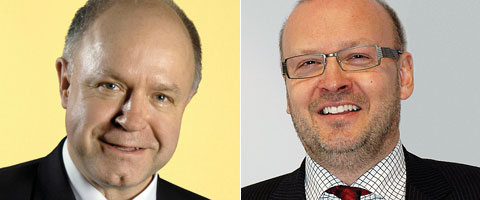
Sweden's tax system is characterized by an increasing number of special rules and exceptions. A reform is therefore necessary to make taxes transparent, predictable and fair, write Svante Forsberg and Dan Brännström, Chairman and Secretary General of Far – the Institute for the Accountancy Profession in Sweden.
• Sweden slams new sanctions for fiscal laggards
• Europe's new austerity measures to slash debts
In 1991 a tax reform was presented in Sweden which came to be known as the "tax reform of the century". The background to this was that the Swedish tax system had become dominated by a growing number of special solutions, special rules and exceptions. Decades of patchwork solutions had led to reduced tax bases and rocked the legitimacy of the whole system. Through this tax reform, Sweden got broader tax bases and tax rates could thus be adjusted. We got a tax collection system which was transparent, uniform and legitimate.
But since the tax reform was launched a lot has happened. The economy has become globalised. The service sector employs more people. Sweden has joined the EU and experienced two of the worst financial crises in modern history. The business community and welfare have been subjected to strong external pressure.
In addition, political majorities - from both blocks – have competed in using tax as a tool in the battle for voters. During the 20 years since the last tax reform, hundreds of bigger and smaller adjustments have been made, resulting in a significant departure from the reform’s basic principles. Adjustments which, all too often, have been reactive rather than proactive in nature. The slow adaptation of EU rules on business taxation is one such example. Swedish “värnskatt” (a special income tax for the higher income bracket) in its various guises broke the idea of "half left” (50 percent tax) and all the changes around property tax have been endless. Very few understand the rules for taxation of so-called close company entrepreneurs (fåmansföretagare).
To those can be added the relatively recent introduction of RUT and ROT deductions (i.e. deductions for household services e.g. cleaning, and building industry deductions e.g. for renovation and home improvement) which often lead to problematic demarcation issues, and new proposals on everything from tax rebates on dog walking services to reduced VAT on bicycle repairs.
We are not stating that all special solutions are bad. Individually they may be well justified, but put together they can lead to distortion of competition and counteract what characterizes an excellent tax system: general and understandable tax rules that benefit growth and employment.
Sweden's auditors and advisers, Far, want to see prosperity in the Swedish business world. A prerequisite is, of course, that entrepreneurship is surrounded by a competitive regulatory environment which stimulates growth. Law and order is another foundation. We see daily how the Swedish tax system has changed, and increasingly, creates uncertainty – and often unfairness – among entrepreneurs, which then inhibits their ability to develop their businesses. The principles from the previous tax reform have been hollowed out to such a degree that we are back where we were in the late 1980s. The Swedish tax system is once again a big patchwork quilt.
Sweden's auditors and consultants therefore recommend a broad parliamentary review of the tax system like the one which led to the reformed pension system. The tax reform from the early 1990s may be a little scruffy, but its principles are still valid.
We believe that the starting point for a review should be based on the following, perhaps obvious but quite important, basic principles:
• The tax system should be clear, simple and predictable and should make it easier for Swedish companies to compete internationally. Mobility should be encouraged to meet future manpower supply requirements.
• The tax system should encourage employment and stimulate businesses to grow and hire. It should always be beneficial to educate oneself and to work.
• Structural tax reforms must be based on broad agreements to be sustainable in the long term.
• For the tax system to be perceived as legitimate tax-payers should feel that it is characterized by logic and justice, factors that discourage tax evasion.
We believe that the link is obvious: the more specific rules we have, the higher socio-economic costs we have. Resources that could have been used to develop companies are now often used to adapt to tax rules. Today’s demarcation problems create unnecessary costs for all, from the individual to society at large.
We know that major reforms take time. For example, the investigation into the relationship between accounting and taxation lasted four years. And there is no doubt that Sweden cannot afford to delay key reforms. When the Swiss business school IMD ranks countries’ competitiveness annually Sweden lands in 6th place. But when it comes to tax policy, we end up in a not very creditable 51st place.
It is therefore to be strongly recommended that we start work right away on revising the tax system and Far argues that there are a number of key areas to review in particular. These concern deficit reductions in the corporate sector, capital taxation, the tax status of commercial partnerships and the regulatory environment surrounding residential properties. Far further proposes that tax rules be designed to fit the modernized rules on corporate accounting. Proper balancing of books must be the basis for taxation.
The political block that wins the general election this autumn should – be it right or left wing - immediately initiate work on a new tax reform.
The next generation’s tax system has to fund future welfare and encourage growth in the Swedish economy. There is no reason to wait for the positive impact that a revision of the Swedish tax system would imply.
Svante Forsberg, Chairman, Far
Dan Brännström, Secretary General, Far
- -
Far is the professional institute for authorized public accountants (auktoriserade revisorer), approved public accountants (godkända revisorer), and other highly qualified professionals in the accountancy sector in Sweden. Far members include approximately 6 000 authorized public accountants, approved public accountants and specialists.


Latest Jobs for English speakers in Sweden

Jobs for English speakers in Sweden


