


'Don’t touch the pharmacies'
"Do not let short-term political interests or too-eager authorities jeopardise the country's pharmaceuticals supply or destroy the positive development of the pharmacy industry", representatives for Sweden's pharmacy association write.
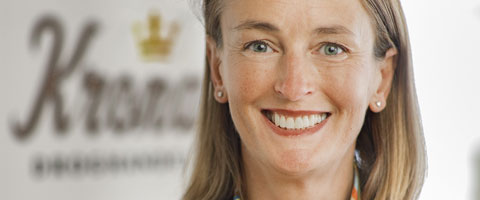
Cecilia Marlow, Chairman of Sweden's pharmacy association
• Sweden's first private pharmacy opened
• Sweden’s pharmacy monopoly falls today
The Swedish pharmacy market is currently worth about 30 billion kronor ($3.75 billion). Society pays 80 percent of the costs of prescription medicines, which also account for 80 percent of sales. That society requires standards of transparency and governance is therefore perfectly legitimate and obvious.
For the first time in 40 years, customers and society can benefit from the advantages that come from free competition in the pharmacy market. This development has already taken off.
The most obvious positive effect of deregulation is more focus on the customer since happy and loyal customers are a prerequisite for profitability. Therefore, we are now seeing a series of positive changes in pharmacies. The most obvious is in increased accessibility. The number of pharmacies increased during 2010 by around 15 percent, equivalent to 150 new pharmacies opening.
The majority of pharmacies inherited from the state-run pharmacy monopoly Apoteket, and all new pharmacies, have also extended their opening hours since deregulation. A new pharmacy has also recently opened in Älmsta in Norrtälje, a town that previously lacked a pharmacy.
Deregulation has also led to greater differentiation and diversity, which was one of the deregulation’s main objectives. The labour market has developed positively for all those working in the industry and about 300 new jobs have already been created due to new pharmacies being set up. We industry representatives can point out that the reform has been implemented properly and that we are on track to achieve the objectives the government has set up.
Despite a positive start though, protests can be heard suggesting substantive changes in the pharmacies market. These concern the price model whereby the Dental and Pharmaceutical Benefits Agency has put forward proposals to introduce reference pricing systems, or systems whereby pharmacy operators lose all negotiating mandate against the pharmaceutical industry.
The opposition has motioned that county councils should be able to open pharmacies because they want to introduce a model based on compensation for services. On May 30 a move was made concerning the reimbursement pharmacies receive for changing to the least expensive equivalent drug - the incentive pharmacies have so that they do their utmost to save money for society - meaning that this incentive will be lost if the opposition wins the election.
Several of these proposals are in their infancy, but they could have very profound effects on the pharmacy industry if implemented. They would fundamentally alter the conditions in an entirely new industry that also has responsibility for the country's pharmaceuticals supply.
At stake are customers' access to good pharmacy service, increased availability and improved service. We hope that all interested parties, political parties and government agencies understand the need for long-term and stable rules.
The Swedish Pharmacy Association brings together all the country's pharmacy operators. We have unique experience in the retail pharmacy business and that must be utilized in the transformation taking place and in the plans now drawn up.
We call for caution and thoughtfulness. The industry is undergoing its biggest change in 40 years. Do not let short-term political interests or too-eager authorities jeopardise the country's pharmaceuticals supply or destroy the positive development of the pharmacy industry.
A clear framework of rules is required, and a longer nurturing period (it is at present less than one year since deregulation) for us to gain the benefits that were the purpose of deregulation. Give the market a chance to evolve, let the competition get the space it needs so that it can develop new services, increase availability and be competitive. Then we will get a deregulation that continues to make both customers and society the winners.
Cecilia Marlow
Chairman, Sweden's pharmacy association,
Director, Kronans droghandel
Stefan Carlsson
Vice Chair, Sweden's pharmacy association,
Director, Apoteket AB
Åsa Lilja
Board member, Sweden's pharmacy association,
Director, Åhléns Pharmacy
Håkan Magnusson
Board member, Sweden's pharmacy association,
Business Director, Ica Cura Pharmacy
Anders Nyberg
Board member, Sweden's pharmacy association,
Director, Apoteket Hjärtat
Mads Haaland-Paulsen
Board member, Sweden's pharmacy association,
Director, Doc Morris
Tony Rydberg
Board member, Sweden's pharmacy association,
Director, Vårdapoteket
Fredrik Söderberg
Board member, Sweden's pharmacy association,
Director, Medstop
Jens Sandström
Board member, Sweden's pharmacy association,
Director, Apoteksgruppen
Fredrik Skepp
Board member, Sweden's pharmacy association,
Director, Foxfarmaci
Johan Waller
Director, Sweden's pharmacy association
Last Updated (Friday, 11 June 2010 15:27)


Latest Jobs for English speakers in Sweden

Jobs for English speakers in Sweden


