
The Swedish Wire is a media production company that provides high-quality text, image and video content for international clients.
First Danish woman PM: an uptown girl leading the workers
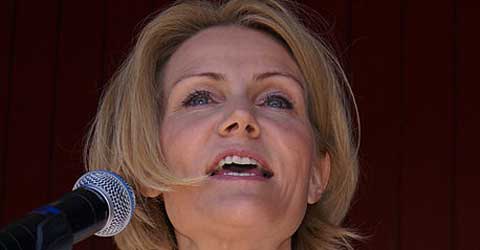
COPENHAGEN, September 15, 2011 (AFP) – Helle Thorning-Schmidt, who will become Denmark’s first woman prime minister, is a consensus builder who despite a polished and wealthy image has become the natural leader of the traditional workers’ party.
The 44-year-old tall, elegant blond with piercing green-blue eyes has headed the Social Democrats since 2005, but due to her taste for designer clothes and handbags finds herself stuck with the nickname “Gucci Helle.”
The head of the four-party alliance that won Thursday’s general election — returning the centre-left to power after a decade out in the cold — is more than a pretty face.
Six years ago, at 38, she became the first woman to rule the Social Democrats, which dominated Danish politics for most of the 20th century.
She has a reputation for being tough but also an accomplished team player who is credited with uniting the party she inherited in a state of disarray after the 2005 election loss.
“She overcame wounds going back to the early 1990s,” Rune Subager, a political science professor Aarhus University, told AFP.
She is known for striving towards the middle ground of Danish politics, and has accomplished the previously unthinkable task of drawing the far-left Red Greens and the centrist and market liberal Social Liberal Party into the same coalition, which also includes the centre-left Socialist People’s Party.
Such accomplishments, observers say, are more significant than her becoming Denmark’s first woman prime minister.
“The fact that she is a woman is secondary,” Ann Linde, the international secretary for the Social Democrats in neighbouring Sweden, told Swedish radio.
Thorning-Schmidt’s gender has in fact barely been mentioned during the campaign, and observers say they do not expect gender equality to rise higher on the agenda with her in charge.
“It’s historic, it’s overdue, but it will not entail any major changes in politics,” Ove Pedersen, a professor of comparative politics at the Copenhagen Business School, told AFP.
In fact, the new government is expected to offer few radical breaks from the past.
“They will basically stay the course,” Pedersen said.
Thorning-Schmidt has for instance said she is in favour of a more humane immigration policy than the restrictive rules pushed through by the exiting centre-right coalition and especially its far-right parliamentary ally the Danish People’s Party.
Yet she has vowed not to roll back many of the changes they made.
When it comes to the economy — the main focus of the election — she has meanwhile moved increasingly left, now fiercely defending Denmark’s early retirement system.
“We are not jumping on the austerity wagon,” she told reporters this week.
She has called for higher taxes on the wealthy, but at the same time she and her husband Stephen Kinnock — the son of Britain’s former Labour party leader Neil Kinnock — have been questioned but cleared in connection with reports they had claimed excessive tax allowances.
The couple and their two daughters live in one of Copenhagen’s poshest neighbourhoods.
Thorning-Schmidt’s expensive taste at first made it difficult for the party base to accept her.
Linde of Sweden‘s Social Democrats described a meeting where a Danish working-class party member jumped up and asked how a Gucci-clad Thorning-Schmidt would connect with voters.
She answered simply: “We can’t all look like shit,” immediately earning the man’s respect, Linde recalled.
Subager agrees initial resistance to her image quickly wore off, “and with winning the prime minister seat, I don’t think they will hold anything against her.”
Born on December 16, 1966 in a Copenhagen suburb as the youngest of three children, Thorning-Schmidt had an average Danish childhood.
Her office manager mother and economics professor father divorced when she was 11, and she moved with her mother from their house to an apartment.
She has a political science degree from the University of Copenhagen and worked as a consultant on EU issues for Denmark’s main union LO before serving as a member of the European parliament from 1999 to 2004.
Last Updated (Friday, 16 September 2011 09:11)


Latest Jobs for English speakers in Sweden

Jobs for English speakers in Sweden